
Dr. Sheibani’s courses offer nuanced and scholarly understandings of the past, present, and future of Islamic tradition that are accessible and application-oriented.
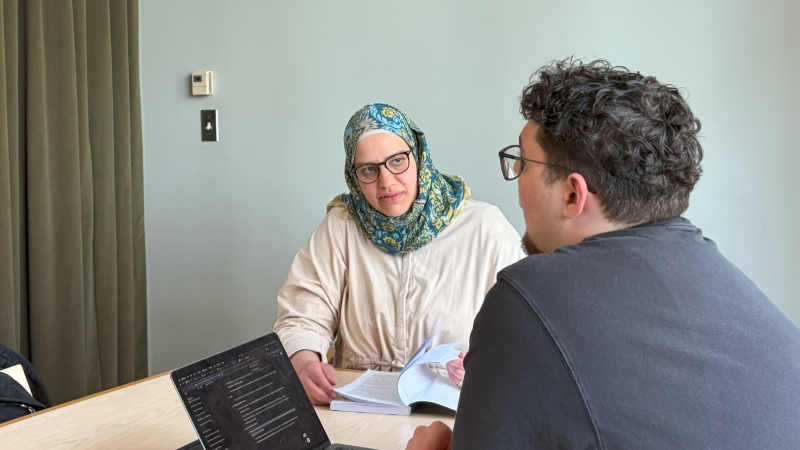
My teaching brings together the intellectual depth of Islamic scholarship and the practical needs of contemporary Muslim communities.
As Assistant Professor of Islamic Thought at Brandeis University, I teach courses that explore Islamic law, ethics, and spirituality through critical engagement with historical and contemporary sources. My approach challenges students to examine their intellectual frameworks and cultivate the discernment needed to participate thoughtfully in an interconnected, pluralistic world.
Beyond the university, I extend this work through Maʿruf Commons, the research and education organization I founded in 2025. At Maʿruf Commons, I design learning experiences that equip practitioners, service providers, and community leaders to integrate Islamic principles into their personal and professional lives.
COURSES


EDUCATIONAL APPROACH
My educational and training programs empower participants to analyze critical issues, co-construct solutions to shared challenges, and offer practical tools for cultivating a meaningful, God-centered spiritual life.
The educational spaces I facilitate draw on two decades of training in the classical Islamic sciences and graduate training at the University of Chicago and Harvard Law School. My courses bring together the best of academic and historical approaches to contemporary challenges, combined with a nuanced and scholarly understanding of Islamic tradition, and delivered through an engaging, application-oriented, and discussion-based approach.
By delivering accessible, relevant, and research-based courses and trainings to individuals, communities, and organizations, I offer new understandings of the past, present, and future of Muslim thought, practice, and community.
EDUCATION COLLABORATIONS
I work alongside scholars, practitioners, and educators to co-construct knowledge and create learning experiences that draw on diverse and lived experiences and that are practical, spiritually enriching, and grounded in tradition.



What students have to say